


The image is older than you think. Two centuries before anyone said “AI,” Goethe gave it a line in Faust: one mind, a thousand hands. The great work, done at the speed of a single will.
It’s an addictive image.
Today, it looks like a sharp operator running a swarm of agents, doing the work of a whole department, alone. It screams 90s or early 2000s movie vibes: a hacker clacking away at maddening speed on not two, but three different keyboards.
This is how AI gets explained to us. And it teaches the wrong lesson.
It flatters the person hearing it: you, specifically, are the asset.
A superhuman. How could that possibly be the wrong lesson? It’s empowering, right? With AI you can do everything. You don’t need anyone.
Hold that thought. Let’s go back to the 19th century. What happened to that single will? Did he become superhuman?
Far from it. He was old, blind, and convinced he was building his paradise on earth. He wasn’t. The unseen hands were digging his grave.
So what’s wrong with being the one brain with a thousand hands?
Follow it down to its natural end and you don’t get a stronger company. You get a bottleneck with great PR. The work rips while you’re at the keyboard and stops the second you step away.
The better you are, the worse it gets. The more the team routes projects through you, the more fragile everything you touch becomes. The frame doesn’t teach you to build capability. It teaches you to become the thing everyone waits on.
That’s not a foundation. That’s a time bomb.
Entropy is a choice
So which one do you have? That’s easy. You have the one you pick. Let’s break it down.
One-brain means the capability lives in one person: You, the gravedigger.
That can look like a clever prompt that lives in your head or in a template doc on your desktop. The judgment about when and how it’s safe to run is yours, an instinct, never written down. It’s not a team-wide SOP. The setup that makes it work is a sequence of steps you remember because you built them. Left alone, it decays.
It’s not malicious. It’s just what happens when one person gets good fast.
But it comes at a cost. Workflows break. Not by bad luck. By mechanical failure.
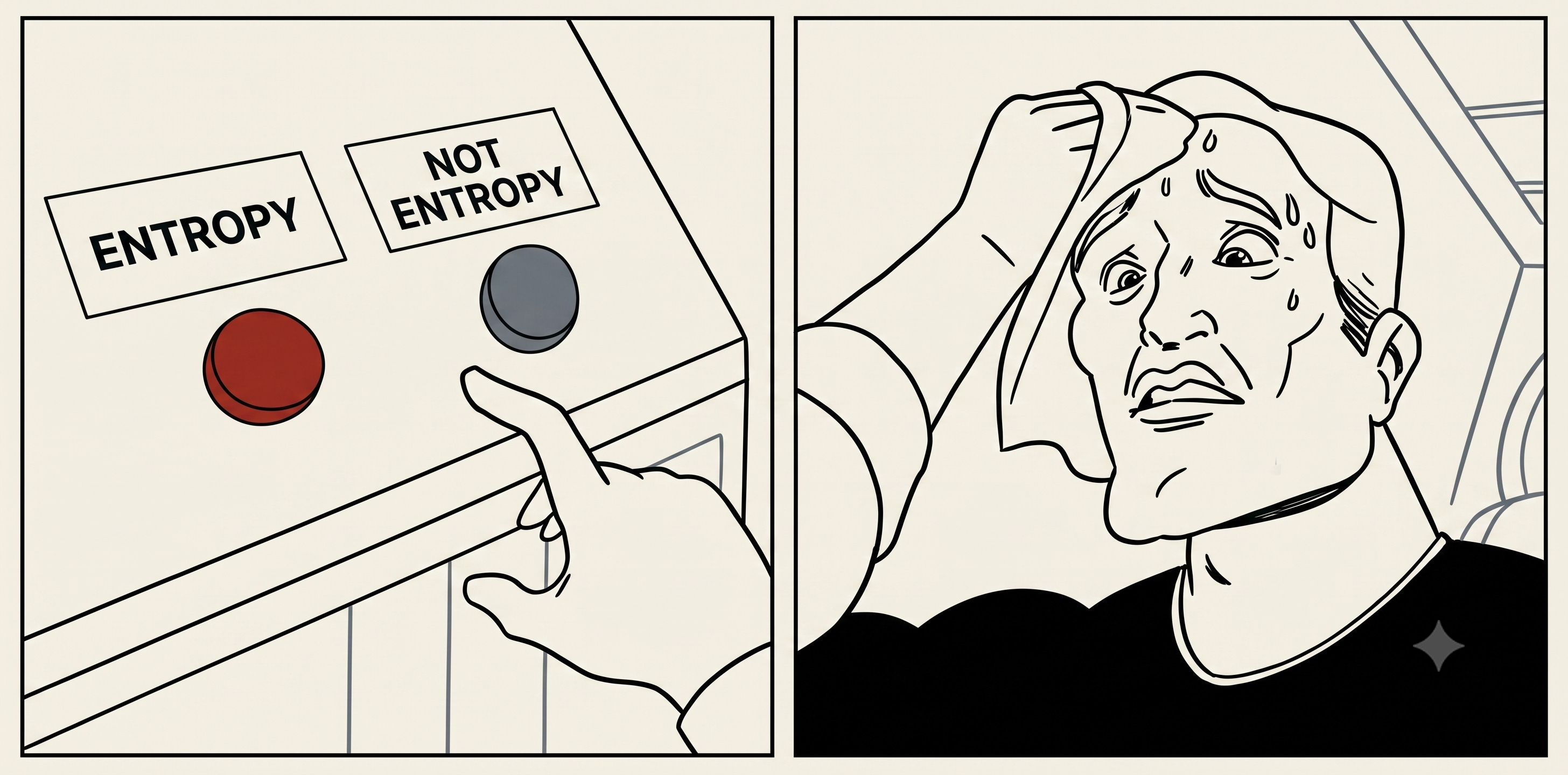
Picture this: It’s an ordinary Tuesday. Two teammates need the workflow the same morning, so one of them has to wait. That’s a bottleneck, and it showed up the instant demand outran one person’s hours.
When the work runs through you, it runs on your terms: your calendar, your sick days, your attention span at 4pm. Throughput looks great, right up until the queue forms behind your desk.
Nobody notices the time bomb, because it’s invisible as long as you’re in the room.
But then you leave and the clock starts.
If the capability lives in you, you have no foundation.
What’s missing isn’t the documents. It isn’t the logins. It’s the ability to run the thing at all, because the parts that made it work were never outside your head.
The business paid for leverage and got a dependency. Whoops.
The two feel identical until the day they don’t.
So what you’re supposed to be building isn’t just clever prompt. It’s a workflow the team can run without you in the room. Same tools, same models, different question.
One-brain asks: how good can I get?
Org-minded asks: what can this place do on a Tuesday when I’m not here?
Answer the second one and the rest follows: what you build, and how you know you’re done.
One move, start to finish
Let me make it concrete. You could use this one this week.
My most transferable AI systems are the ones that you can paste into an ordinary chat window. The kind your teammates already have open. The whole thing is one block of text: the instructions, the context it needs, the spots where it should stop and check. A teammate opens the chat they already use, pastes the block, and goes.
No app to install. No new login. No admin sign-off. No IT ticket rotting in a queue for three weeks.
Sounds like a convenience. A nice-to-have bolted onto the real work.
It’s not. It’s the whole thesis folded into one design decision: I build against the most basic surface everyone already has, not the loaded environment I personally run. The cleverness goes into the text, which travels, not into my toolbox, which stays with me.
"You do not rise to the level of your goals. You fall to the level of your systems."
- James Clear, Atomic Habits
Look at what that one choice kills. Every dependency you put between a teammate and the workflow is a place where adoption will die, and most of them die quietly.
A complex required install means waiting on an IT tech to service a laptop you don’t have admin permissions to. A new login means a vendor review nobody wants to do. A setup only you hold means the thing runs only when you’re around to grant it: the bottleneck again, wearing a different hat.
Rationalizing is easy. Each one is reasonable on its own. Together they’re fatal.
To be clear, that’s a point about where the workflow deploys, not about skipping oversight. Removing the IT ticket is not the same as removing the review. The judgment about when it’s safe to run comes back in the next move, on purpose. The deployment choice removes the friction that kills adoption. It doesn’t remove the checkpoint that keeps the work reliable.
It also changes how you build, before you ever deploy.
When what you’re handing over is a block of text, you have to get everything out of your head: the steps, the context, the judgment calls, the order they go in. You can’t lean on the setup you remember, because there is no forgettable setup. There’s only the text. Aiming at the most basic surface drags the whole workflow onto the page, where someone else can run it. The constraint does the teaching for you.
Now the test, which is also the trap.
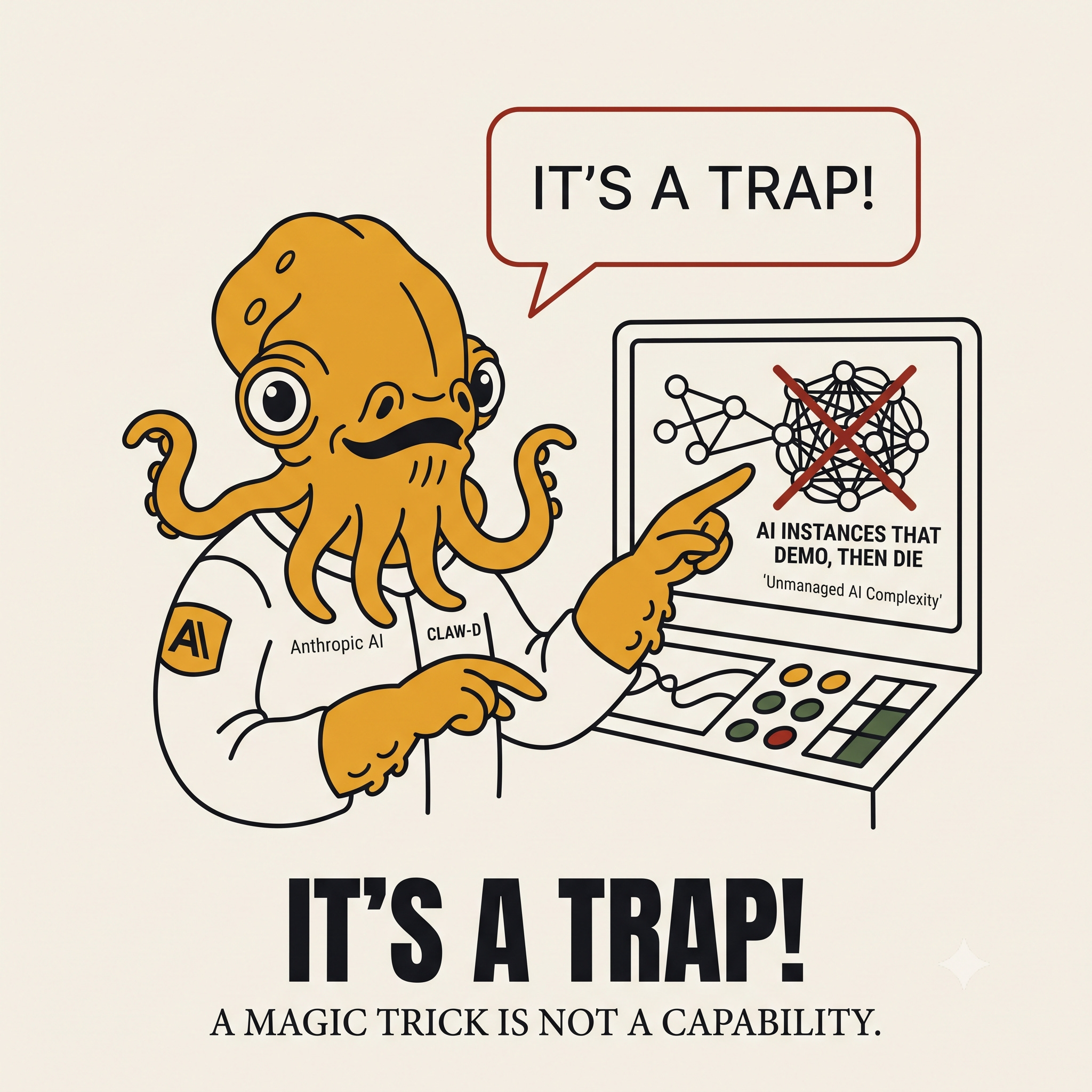
Build the same workflow in your own loaded environment, every tool wired up, every shortcut in muscle memory, and it’ll demo beautifully. It’ll also die at the handoff, because what you demonstrated only runs while you’re holding the wand.
A workflow that needs you in the room isn’t an org capability. It’s a magic trick. The room claps, and then they go back to doing it the old way, because the trick left with the magician.
Could a teammate run this from a browser, today, without me? If the honest answer is no, I haven’t built an org-runnable workflow yet. No matter how good the demo looked.
Three more moves, with teeth
The deploy move is one piece of a bigger instinct: build it so it survives you leaving.
That instinct shows up in three more places. I’ll sketch these out instead of working them start to finish, but each one is real and each one has an edge.
Put infrastructure under the prompt. Prompting is table stakes. What decides whether a prompt lands is the files underneath it: the context, the reference material, the standing instructions the workflow reads from. Build that and the work stops depending on whatever happened to be in your head the day you wrote the prompt. Skip it and you’ve got a great prompt that only fires in the one session where you remembered everything. What it looks like: the workflow reads from files that live somewhere durable, so anyone running it starts on the same ground you did. That, finally, is a foundation.
Find the checkpoint. Every workflow worth handing off has a place where a human has to look before the thing moves forward. Name it. Write down exactly where someone signs off and what they’re checking for. This is the step beginners skip. It’s also the one that keeps the workflow safe in someone else’s hands, because the person running it doesn’t have your gut for when to stop. What it looks like: one written line, “check this here before it goes out.” The judgment you held as instinct, finally written down, traveling with the work.
Teach the shape, rep by rep. AI literacy is mostly one flow, repeated constantly:
Trigger, Steps, Checkpoint, Output.
What sets it off, what it does, where the human looks, what comes out. Teach that shape on a real case the person already lived, not an abstract framework. Then teach it again, and again, until someone who isn’t you runs the workflow on a Tuesday without calling you. What it looks like: you’re done when they can run it without you, not the moment you figured it out yourself.
Adoption is the deliverable
Notice what all four moves are really about. None of them makes the AI “smarter”. Each one simply puts the workflow into more hands. That’s org-minded.
That’s the reframe the one-brain image hides. Adoption isn’t the step after the build, the rollout you get to once the real work is done. Adoption is the deliverable. A workflow nobody but you will run isn’t a capability the company has. It’s a demo.
The build is half the job, and it’s the easy half, because getting a model to do something impressive once is now trivial. Getting an organization to actually run it, every Tuesday, without you, is the part that creates durable value.
And it’s where the old image finally flips. The great work never needed one mind commanding a thousand hands. It needed the mind written down. Then the thousand hands get to work.
Why this matters
Here’s the part that surprised me.
Teaching is unglamorous work. It’s also the thing outsiders interpret as expertise.
In a graduate course, after one live session, the instructor asked me to help re-envision the AI curriculum. Not because I had the flashiest demo in the room.
Because I could take a workflow apart and rebuild it inside someone else’s framework so other people could run it.
The skill that makes AI valuable to an organization is the same skill that makes you readable to anyone sizing you up: a hiring manager, a client, the room you’re trying to win over. Making the work “runnable” by your org and making yourself credible are the same thing.
Not a coincidence. The point.
One caution
None of this says put the tools down. Be excellent with them. Run all of them, know which one fits which job, push them harder than the people around you.
The argument isn’t about your skill. It’s about where you aim it.
Aim it inward and you become the one brain everyone waits on, more impressive and more fragile every month. Aim it outward and you leave the team more capable than you found it. Same skill, opposite outcomes.
The question that decides it
So when you build your next AI workflow, ask the one question that actually measures the value: could someone who isn’t you run this on a Tuesday morning?
If the honest answer is no, you’re not done. You’ve made yourself harder to replace. That’s a different goal, and probably a worse one.
It’s also the goal that left Faust blind over a grave he thought was a garden.
That question is lesson one of a longer climb, because answering it well demands a few things the one-brain frame never taught you.
It demands knowing what a capability actually is, so you’re building a documented, repeatable, reviewable workflow and not just a clever chatbot you have to babysit. Fun.
That’s the next lesson.
It demands diagnosing before you build: ladder the real problem to its root, test whether it’s even the right shape for AI, prove the cheap layer first instead of pouring effort into the wrong thing.
That’s the one after.
And it demands the commitment to adoption, employee by employee, the part this piece only pointed at: how you actually get an organization to run the thing.
That earns its own post too, because it’s real work.
The choice still stands: stay the one brain, or build the thing that runs without you. The second path starts here, lesson by lesson. Subscribe.